Many of the customs and ceremonies associated with the holy shrine of Imam Reza (AS) in Mashhad, like other cultural and historical features of the Iranian city, are rooted in a long-standing bond centered on the holy shrine—one shaped by faith, popular beliefs, and spiritual traditions that have endured for centuries.
Among these rituals, the ancient dusting ceremony holds a special place. With a history spanning nearly 500 years, it continues to be performed on specific occasions with formal and distinctive rites. Within this tradition, the use of peacock feathers in the dusting of the shrine, particularly the sacred tomb, carries an old and philosophical significance.
Javad Navaeian Rudsari, a historian and researcher in Razavi culture, said that throughout history, devotion to Imam Reza (AS) and his holy shrine has not been limited to followers of a particular religious background, noting that the grandeur of the shrine has drawn the hearts of all Muslims and sometimes even non-Muslims. He added that part of these ceremonies stems from the sincere devotion and divine love of the followers of the Prophet’s Household.
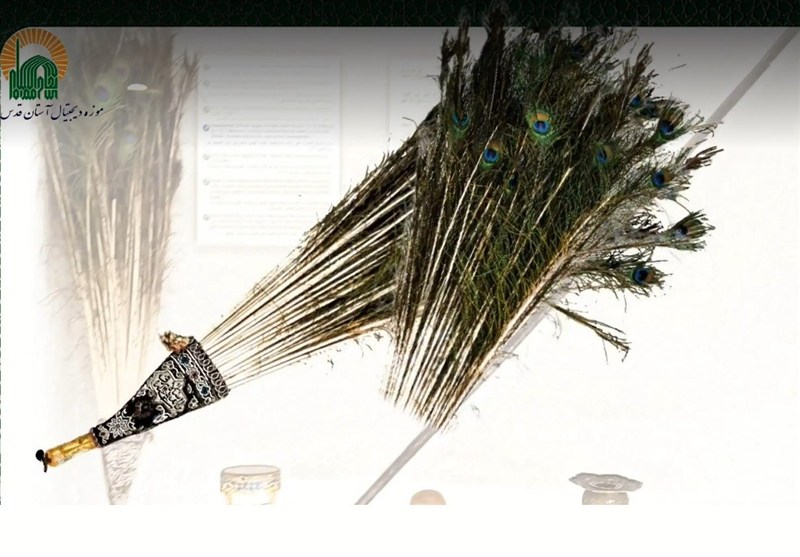
Referring to the historical background of using peacock feathers in the shrine, he said it appears that employing peacock feathers as a ceremonial and highly valuable item for dusting in the holy shrine has a long history, although existing documents do not predate the Safavid era.
Navaeian Rudsari explained that since the peacock is native to India, donors who endowed such items were often Shiites from the Indian subcontinent. However, notable figures from other regions, including Iran, also contributed such precious offerings, although the source of the material was naturally India.
He further noted that among documents preserved at the Astan Quds Razavi Archives Center, there is a record dated 1111 AH (1078 SH), during the reign of Shah Sultan Hussein of the Safavid period, referring to the preparation of a broom made of peacock feathers for dusting the sacred shrine. He described this document as likely the oldest evidence of such usage.
The researcher added that the practice continued into the Qajar era, when the craftsmanship of binding peacock-feather brooms and decorating them with pearls and precious stones gained greater attention. One notable example, he said, is a broom endowed by the mother of Hassan Khan Salar, a ruler of Mashhad during the late reign of Mohammad Shah and early reign of Naser al-Din Shah Qajar. The broom, over one meter long, is now preserved in the Astan Quds Razavi Museum and is distinguished by its intricate pearl embroidery and decorations.
He also pointed to a specific vow involving the donation of peacock feathers, citing a document from 1312 SH concerning efforts by Seyed Baqer Hossein, an Indian Shiite residing in Hyderabad Deccan, to import a peacock-feather broom for use in dusting the sacred tomb of Imam Reza (AS). He said the offering was a gift by Seyed Baqer Hossein Deccani, with its transportation handled by a postal shipping company in Zahedan known as “Khilanda Ram & Bros.”.